Robotics: from CAD file to built 3D part
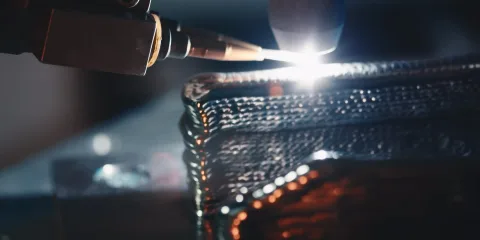
The vision is to manufacture 3D components larger than 1 metre using Plasma Metal Deposition. Typical applications include machine components, vehicle components (medium term) and aircraft components (long term).
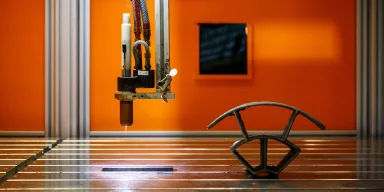
Over the past years RHP has built up Plasma Metal Deposition and used it to develop the so-called 4M system – “Machine for Multimaterial Manufacturing”. With a 3-axis portal system we have already produced components of around 500 mm as well as multi-material parts.
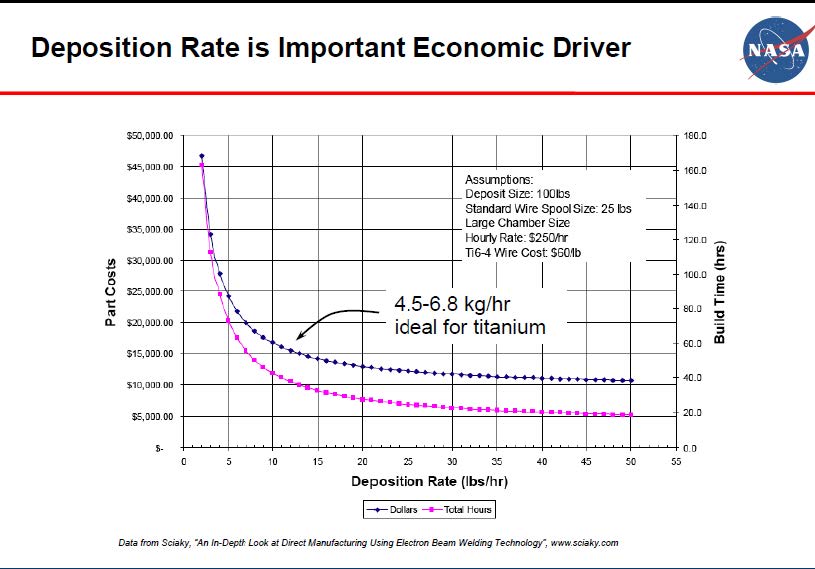
The aim of the project is to build the next generation of additive manufacturing for large-format components. Additive manufacturing has so far concentrated mainly on powder bed processes. These allow very complex parts, but they are limited in component size, with build rates of around 0.5 kg per hour.
Plasma and arc-based processes
The use of arc-based technology to build free-form parts began in Germany in the 1960s, when companies such as Krupp, Thyssen and Sulzer used arc welding equipment to produce the first large components (rings, tubes) with simple geometries. Most research on arc-based additive manufacturing focuses on Gas Metal Arc Welding (GMAW), Gas Tungsten Arc Welding (GTAW), Plasma Transferred Arc (PTA) welding and Plasma Arc Wire (PAW) welding. These processes use an electric arc and feed metal powder or wire; they are widely used for welding, tool repair and wear-resistant coatings. While laser and electron-beam processes have long been used to create 3D contours in a powder bed or by deposition of powder or wire, arc processes – and plasma arc processes in particular – have so far mainly been used for wear-resistant coatings, surface repair and welding.
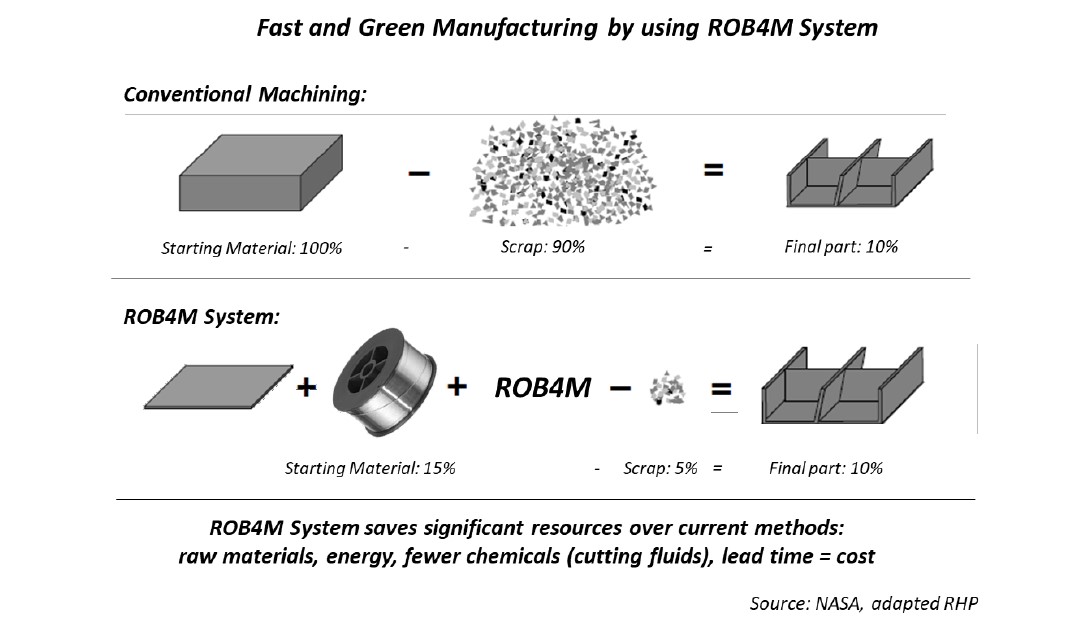
Compared with powder bed processes, plasma arc processes offer clear advantages in build rate and in the choice of feedstock. Powder bed processes require a very narrow particle size distribution with high sphericity and therefore expensive raw materials. Plasma Metal Deposition, by contrast, uses either much coarser – and considerably cheaper – powder fractions or wire. Wire in particular brings several advantages: low oxygen content, simpler incoming inspection and, for standard alloys, lower material cost than powder.
The aerospace industry uses the buy-to-fly ratio (BTF or B2F) to describe how much semi-finished material is needed relative to the finished part. This ratio can reach 10:1 or more – i.e. 100 kg of semi-finished material for a 10 kg part. With the Rob4M system we aim for a buy-to-fly ratio of 1.5:1 or lower.